What Did the Inventor of the 10 Ton Truck Say: Revolutionary Insights
Imagine standing next to a massive 10-ton truck, its wheels towering over you, its engine rumbling like a beast ready to charge. It’s a marvel of engineering, a testament to human ingenuity.
But have you ever wondered what the inventor of such a colossal machine might say about their creation? What inspired them to build something so grand, and what challenges did they overcome? If you’re curious about the story behind this giant of the road and want to uncover the mind of its creator, you’re in the right place.
This article will take you through the thoughts, motivations, and insights of the visionary who dared to dream big. Prepare to be inspired, intrigued, and perhaps even surprised by what you learn.
Credit: mabrymsblog.typepad.com
Origins Of The 10 Ton Truck
When you think about the evolution of transportation, you might wonder how the 10-ton truck came to be. These massive vehicles have transformed industries, enabling the transport of heavy loads efficiently. But where did they originate, and what did their inventor say about their creation?
Historical Context
Picture the early 20th century, a time of rapid industrial growth. Factories were booming, and cities were expanding. The need for larger transport solutions was clear. Before the invention of the 10-ton truck, most cargo was moved by rail or smaller vehicles, limiting flexibility and speed.
It was an era of innovation, and inventors were racing to build machines that could meet the demands of a new age. The 10-ton truck emerged as a powerful solution, changing the landscape of logistics forever. Can you imagine how businesses operated before these trucks existed?
Inventor’s Background
The inventor of the 10-ton truck was no stranger to challenges. Growing up in a small town with limited resources, he often had to improvise solutions for everyday problems. This ingenuity laid the foundation for his future inventions.
His early career involved working with smaller vehicles, refining his understanding of mechanics and transport needs. When faced with the question of how to move larger loads, he drew from his experiences. He once said, “Necessity is the best teacher, and my background taught me to listen to it.”
Reflecting on his journey, the inventor emphasized the importance of persistence and curiosity. He believed that asking the right questions was crucial to innovation. What questions could you ask to drive your ideas forward?
Design Philosophy
In the realm of design philosophy, the inventor of the 10-ton truck emphasized simplicity and functionality. He believed that a truck’s design should focus on efficiency and practicality. His approach ensured these vehicles could handle heavy loads while maintaining ease of use and reliability for drivers.
The design philosophy behind the 10-ton truck was a groundbreaking endeavor in the realm of heavy transport. The inventor aimed to create a vehicle that was not only powerful but also efficient, challenging the norms of the time. This philosophy paved the way for what would become a staple in the logistics and transportation industries.Innovation In Heavy Transport
Innovation was at the heart of the 10-ton truck’s design. The inventor knew that merely increasing size and power wasn’t enough. It was about rethinking how heavy transport could be more reliable and adaptable to various terrains. Imagine a time when moving heavy loads was a cumbersome task, often fraught with delays and inefficiencies. The 10-ton truck changed this narrative by introducing features like improved suspension systems and durable materials. These innovations allowed the truck to handle rough roads and heavy loads with ease, setting a new standard in the industry. What innovations have you seen in your field recently that challenge the old ways of doing things?Balancing Power And Efficiency
The challenge of balancing power and efficiency was a significant focus for the inventor. They understood that a truck with immense power would be useless if it consumed too much fuel or broke down often. Therefore, the design included an engine that was both robust and fuel-efficient. The inventor took inspiration from personal experiences, having witnessed firsthand the issues with earlier models. They realized that a sustainable approach was vital. By using lighter yet stronger materials, the truck’s overall weight was reduced without compromising its load capacity. Consider how you balance power and efficiency in your own projects. Are there areas where you could optimize? The 10-ton truck’s design philosophy not only reshaped the heavy transport industry but also inspired future innovations. It serves as a reminder that with the right mindset, even the most daunting challenges can be overcome.Technological Breakthroughs
The invention of the 10-ton truck marked a milestone in the transport industry. It wasn’t just about carrying heavier loads. It was about the technological breakthroughs that made it possible. These advancements changed how trucks were designed and built.
Advanced Engineering Techniques
Engineers focused on improving truck performance. They looked at power, efficiency, and safety. New techniques helped balance heavy loads. Steering and braking systems evolved. This ensured better control for drivers. Engineers also worked on reducing truck weight. This helped increase fuel efficiency.
Material Selection And Durability
Choosing the right materials was crucial. Strong materials withstand wear and tear. Engineers used steel and aluminum for truck frames. These metals are durable and light. This combination helped extend truck life. It also made maintenance easier and less frequent.
Materials also affected load capacity. Trucks needed to carry more without breaking down. Engineers tested different materials for strength. Only the best were used in production. This ensured trucks could handle the toughest jobs.

Credit: brainly.com
Impact On Industry
The inventor of the 10-ton truck highlighted its transformative influence on transportation. This innovation streamlined logistics and bolstered industry efficiency, reshaping commercial transport. Businesses experienced faster deliveries and reduced costs, marking a new era in freight movement.
The invention of the 10-ton truck marked a pivotal moment in industrial history. Its introduction revolutionized how goods were transported, dramatically enhancing efficiency. This innovation didn’t just change logistics; it reshaped entire economic landscapes.Transforming Logistics
The 10-ton truck brought a transformative change to the logistics sector. It allowed businesses to move larger quantities of goods in a single trip. Imagine the time and resources saved when fewer trips were needed. Before this invention, companies relied heavily on smaller vehicles or rail transport. Trucks provided flexibility, reaching areas railways couldn’t. This meant businesses could expand their reach and deliver products more efficiently. For those working in logistics, this truck was a game-changer. It opened up new opportunities for employment and skill development. Have you ever wondered how your favorite products arrive at stores so quickly? You can thank innovations like the 10-ton truck.Economic Implications
The economic impact of the 10-ton truck was significant. Businesses could now lower transportation costs and increase profit margins. This cost reduction often translated to lower prices for consumers. Industries experienced growth due to improved logistics capabilities. For example, agricultural products could be transported faster, reducing spoilage. This not only benefited farmers but also ensured fresh produce reached your table. The truck’s introduction also spurred infrastructure development. Roads and highways were improved to accommodate these larger vehicles. This infrastructure investment further stimulated economic growth by enhancing connectivity between regions. The 10-ton truck did more than transport goods—it drove economic progress. What other innovations could have such a profound effect on our daily lives? Consider the possibilities as technology continues to advance.Inventor’s Vision
The inventor of the 10-ton truck had a vision that transformed heavy transportation. He saw beyond the weight and metal. He imagined a world where trucks could carry more, while being efficient. His vision wasn’t just about creating a powerful machine. It was about changing how we move large goods and materials.
Future Of Heavy Transportation
Heavy transportation is evolving rapidly. New technologies are emerging every year. The inventor believed in innovation. He foresaw a future with smart and connected trucks. These vehicles might drive themselves. They could communicate with roads and other vehicles. This would make transportation safer and quicker.
Fuel efficiency was also part of his vision. Trucks using less fuel could reduce costs. This would benefit businesses and the environment. Smaller carbon footprints are becoming more important.
Sustainability Considerations
Sustainability was a key aspect of the inventor’s vision. He understood the impact of large trucks on the planet. Building trucks that consume less energy was vital. He imagined trucks running on alternative fuels. This could be electricity or biofuels.
Reducing emissions was another focus. The inventor wanted trucks to be cleaner. He thought about designs that minimize waste. Sustainability in transportation can help protect our planet.
Challenges And Solutions
Creating a 10-ton truck required overcoming many challenges. The inventor faced difficulties in design and market acceptance. Every challenge demanded a solution. Each solution brought the truck closer to success. Let’s explore the hurdles and solutions in this journey.
Overcoming Initial Hurdles
The first challenge was the truck’s weight. A 10-ton truck needed a strong frame. The inventor used reinforced steel to solve this. Another hurdle was engine power. An ordinary engine couldn’t handle the weight. The inventor designed a new, powerful engine. This allowed the truck to move smoothly. These solutions were key to the truck’s initial success.
Adaptation To Market Needs
The market needed more than just strength. The truck had to be reliable. Regular trucks often broke down. The inventor focused on durability. They improved parts for longer life. Fuel efficiency was another concern. The inventor worked on reducing fuel consumption. This made the truck more appealing. These adaptations met the market’s demands.
Lessons From The Innovator
The inventor of the 10-ton truck shared many valuable lessons. These insights offer a glimpse into the mind of a brilliant innovator. By examining these lessons, aspiring engineers can learn and grow. The wisdom shared is timeless and practical, useful for everyone interested in innovation.
Insights On Innovation Process
Innovation requires patience and a willingness to take risks. The inventor emphasized understanding the problem first. A clear problem leads to effective solutions. They also noted the importance of teamwork. Each team member brings unique skills and perspectives. Listening to diverse ideas can spark unexpected breakthroughs.
Testing ideas is crucial. Early prototypes may fail, but they teach valuable lessons. Iteration and refinement improve the final product. Persistence and resilience are key traits in innovators. Failure is a stepping stone to success, not a dead end.
Advice For Future Engineers
Future engineers must stay curious and open-minded. The inventor advised learning from every experience. Even small projects teach important skills. Curiosity leads to continuous improvement and new ideas. Engineers should embrace technology and stay updated with industry trends.
They should also focus on developing strong communication skills. Sharing ideas clearly helps in collaboration and problem-solving. The inventor encouraged engineers to be adaptable. Change is constant, and flexibility is essential. Being open to new methods and tools can lead to better solutions.
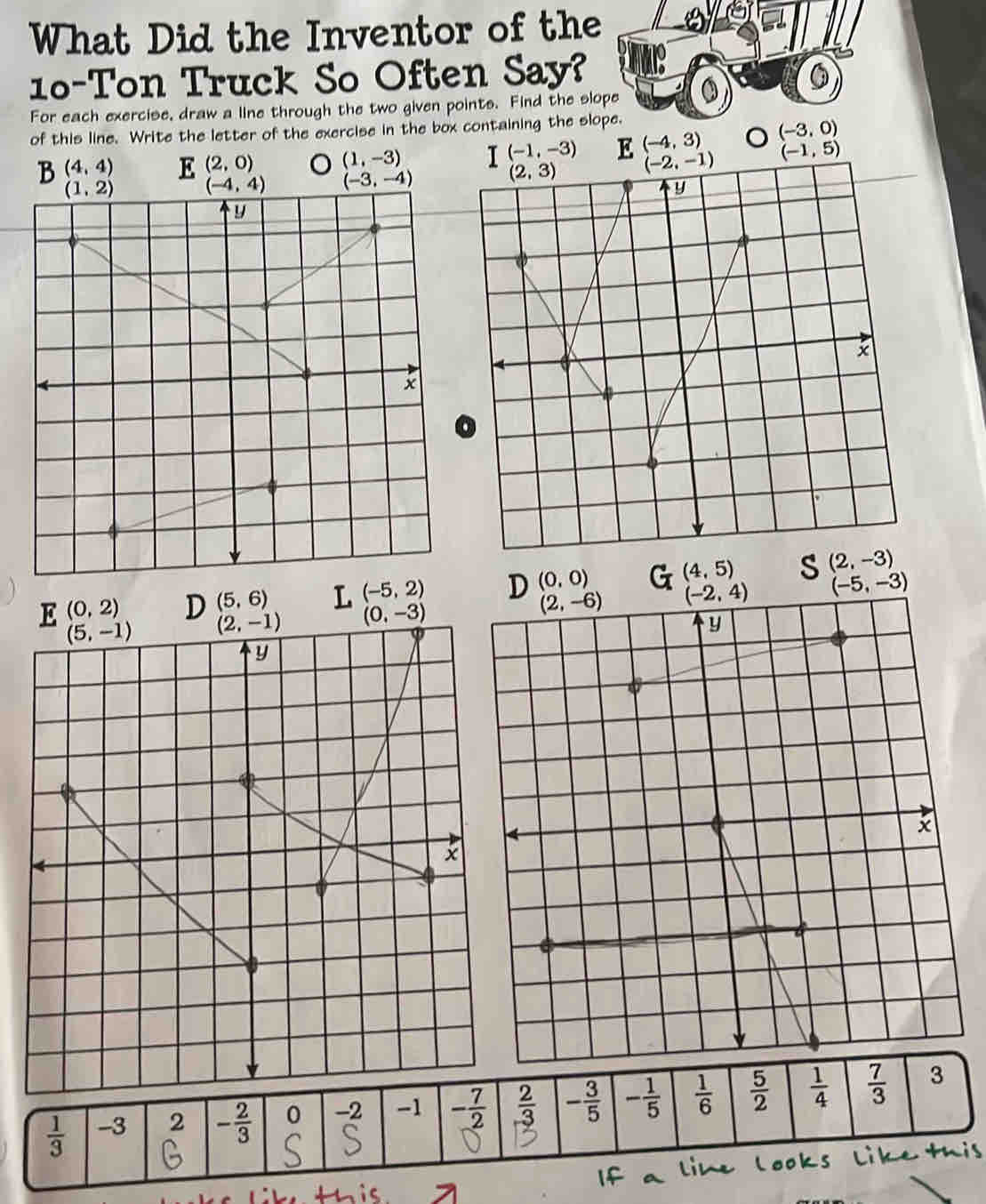
Credit: www.gauthmath.com
Frequently Asked Questions
Who Discovered The Equation Of A Line?
René Descartes, a French mathematician, discovered the equation of a line. He introduced Cartesian coordinates, allowing representation of geometric shapes algebraically. This groundbreaking method laid the foundation for analytical geometry, merging algebra and geometry into a unified mathematical framework. Descartes’ work greatly influenced modern mathematics and scientific methods.
What Inspired The Invention Of The 10 Ton Truck?
The inventor aimed to revolutionize heavy-duty transportation. The goal was to enhance load capacity and efficiency. This innovation responded to industrial demands for robust vehicles. It also aimed at improving logistics and productivity. The invention marked a significant advancement in the trucking industry.
How Did The 10 Ton Truck Impact Industries?
The 10 ton truck transformed logistics by handling larger loads efficiently. It reduced transportation costs significantly. This innovation also improved delivery speed and reliability. Industries could move goods faster, boosting productivity. The truck’s introduction reshaped supply chain operations across various sectors.
What Are The Key Features Of A 10 Ton Truck?
The 10 ton truck boasts a robust chassis and powerful engine. It features advanced suspension for smooth rides. Its design supports heavy load-bearing capacity. Safety features include enhanced braking systems. These trucks prioritize fuel efficiency and durability.
Conclusion
The inventor of the 10-ton truck spoke with vision. He dreamed big. His words inspire us to think beyond limits. Trucks have transformed industries. They move goods efficiently and create jobs. This invention shows the power of human creativity. Engineers continue to innovate, building on past achievements.
Trucks today are safer and more sustainable. The inventor’s legacy lives on. His ideas paved the way for modern transportation. As we look to the future, we remember his bold ideas. They remind us to push boundaries. Always explore new possibilities.

Automotive Specialist & Expert Writer
Tyler Kingston is a passionate automotive writer with a wealth of knowledge in all things cars. With years of experience in the automotive industry, Tyler specializes in everything from vehicle maintenance to the latest car technologies and innovations. He is known for his ability to break down complex automotive concepts into easily digestible, engaging content for both novice and experienced car enthusiasts. Whether it’s detailing car repair techniques, reviewing new car models, or diving into the world of auto accessories, Tyler’s articles provide valuable insights to readers. His hands-on experience, combined with a genuine love for cars, allows him to deliver expert advice, tips, and news that keeps readers coming back for more.