

How Many Amps Does a Car Alternator Put Out: Power Insights
Have you ever wondered about the true power behind your car’s electrical system? It’s easy to overlook, but the car alternator plays a crucial role in keeping your vehicle running smoothly.
Whether you’re a car enthusiast or simply curious about how your vehicle operates, understanding the amperage output of your car alternator can unlock a world of insights. How many amps does a car alternator put out, and why does it matter for you?
Imagine never having to worry about a dead battery again, or being able to power all your car accessories without a hitch. By diving into this topic, you’ll discover not only the numbers but also how they impact your driving experience. Ready to uncover the secrets of your car’s powerhouse? Keep reading to find out how it all works and what it means for you.
Basics Of Car Alternators
Car alternators play a crucial role in a vehicle’s electrical system. They generate electricity to recharge the battery and power various components. Understanding alternators helps you know how they affect your car’s performance. Alternators convert mechanical energy into electrical energy. This process keeps the battery charged and supports electrical devices.
What Is A Car Alternator?
A car alternator is an essential part of the vehicle. It supplies electricity to the electrical system. Without it, the battery would drain quickly. Alternators are driven by the engine’s crankshaft. They work when the engine is running, providing power to the car’s systems.
How Do Alternators Work?
An alternator uses a belt connected to the engine. The belt spins a rotor inside the alternator. This movement creates an electromagnetic field. The alternator then converts this energy into electrical current. This current recharges the battery and powers electrical components.
Components Of A Car Alternator
Alternators consist of several key parts. The rotor and stator generate electricity. A voltage regulator controls the electrical output. The diode rectifier converts AC to DC power. Each part plays a vital role in the alternator’s function.
Importance Of Alternator Output
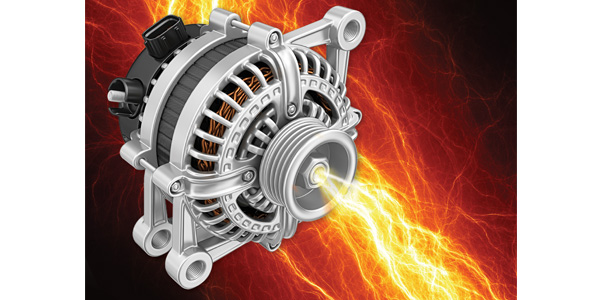
Alternator output determines how much power your car gets. It is measured in amps. A higher output means more power for the battery and devices. Ensuring the alternator works well is essential for car performance.
Credit: www.counterman.com
Function Of An Alternator
The alternator is a crucial part of a car’s electrical system. It converts mechanical energy into electrical energy. This energy powers the car’s electrical components. It also charges the car’s battery while the engine runs.
The alternator helps maintain the battery’s charge. Without it, the battery would quickly drain. This would lead to electrical failures in the car.
How Alternators Generate Electricity
An alternator uses a rotor and stator to generate electricity. The rotor spins inside the stator, creating a magnetic field. This magnetic field produces an electrical current in the stator’s windings.
The alternator’s regulator controls the voltage output. It ensures the electricity is at the right level for the car’s needs. This prevents overcharging and protects the battery.
Powering Electrical Systems
The alternator supplies power to the car’s electrical systems. These systems include the lights, radio, and air conditioning. It also powers electronic systems like GPS and infotainment.
The alternator provides consistent energy for all these systems. This ensures they function smoothly and efficiently.
Charging The Battery
The alternator plays a vital role in battery charging. As the car runs, the alternator sends electricity to the battery. This keeps the battery charged and ready to start the car.
A strong battery is essential for reliable car performance. The alternator ensures the battery remains strong and dependable.
Maintaining Electrical Balance
The alternator helps maintain the car’s electrical balance. It ensures that power demands do not exceed supply. This balance is crucial for preventing electrical overloads.
Electrical balance keeps the car’s systems running effectively. It also protects sensitive electronic components from damage.
Standard Amp Output
The standard amp output of a car alternator is a crucial factor in a vehicle’s electrical system. This output ensures that the battery stays charged and supports various electrical components. Understanding the typical amp range helps car owners maintain their vehicles efficiently.
Most car alternators produce between 65 to 100 amps. This range covers the needs of average vehicles, powering lights, radios, and other essentials. Modern cars, with more electronics, often need higher amp alternators.
The age of the alternator can impact its efficiency. Older alternators might produce fewer amps. Vehicle type also plays a role. Larger vehicles might require more power, thus needing alternators with higher amp output.
Importance Of Correct Amp Output
Choosing the right amp output prevents battery drain. It ensures all electrical systems function correctly. Incorrect amp output can lead to issues, reducing a car’s performance.
Upgrading Your Alternator
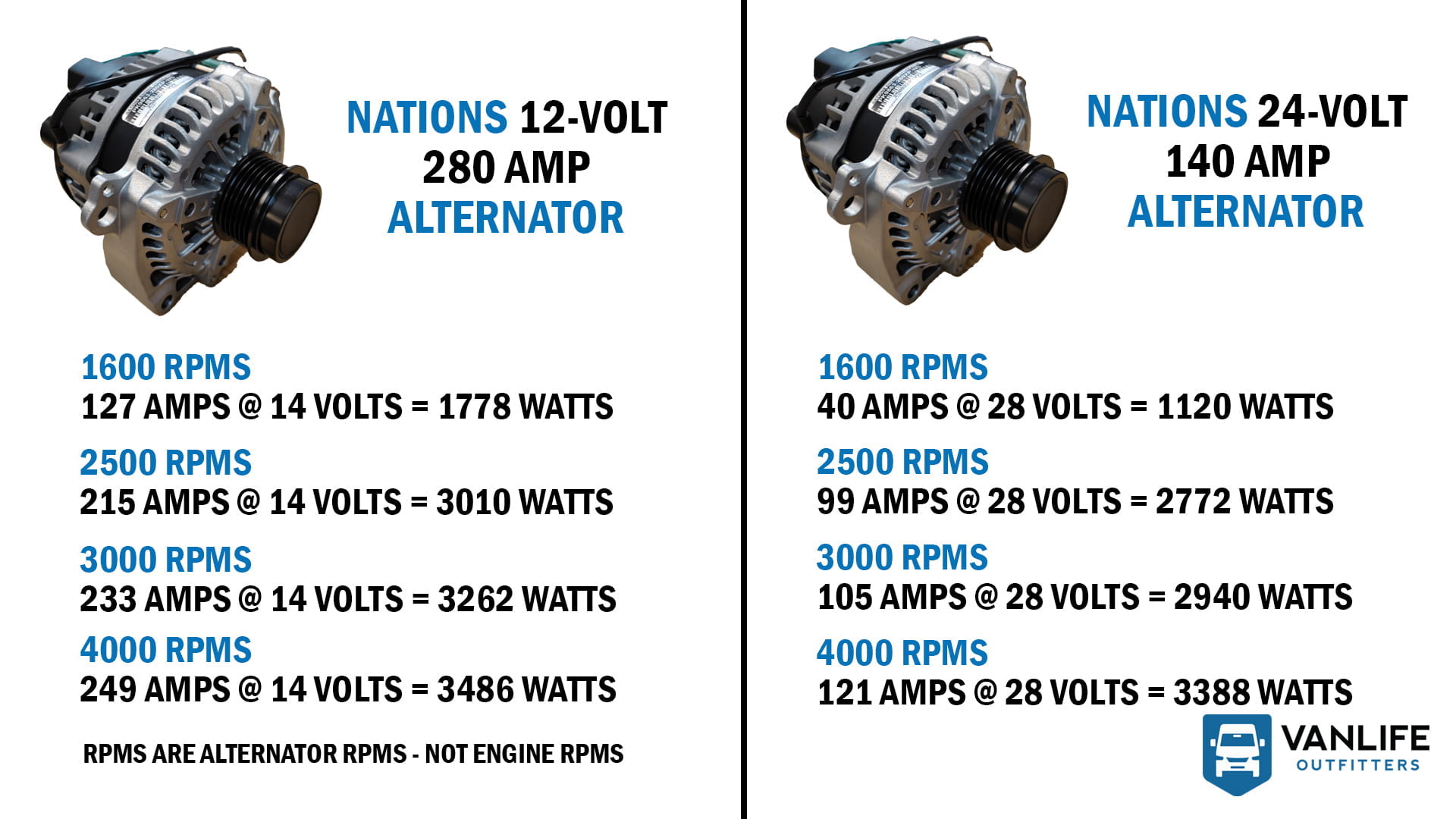
Upgrading to a higher amp alternator benefits vehicles with additional electrical components. It supports aftermarket accessories like high-performance stereos. Ensure compatibility with your car’s electrical system before upgrading.
Credit: www.vanlifeoutfitters.com
Factors Affecting Amp Output
Car alternators typically produce between 40 and 120 amps. Factors like engine size, alternator type, and electrical demand impact output. Understanding these can help manage vehicle power needs effectively.
Factors affecting the amp output of a car alternator can vary significantly. These factors determine how efficiently the alternator can charge the battery and power the vehicle’s electrical systems. Understanding these can help in diagnosing and optimizing car performance.Engine Speed
Engine speed greatly influences alternator output. When the engine runs at higher RPMs, the alternator spins faster. This increased speed boosts the alternator’s ability to produce higher amperage. At idle, the alternator generates less power. Thus, driving at higher speeds often results in better battery charging.Electrical Load
The electrical load impacts how much power the alternator needs to produce. More devices running in the car require more power. Air conditioning, headlights, and audio systems increase the demand on the alternator. When many systems operate at once, the alternator works harder, reducing available amps for battery charging.Alternator Condition
The condition of the alternator itself affects its output. A well-maintained alternator performs efficiently and provides adequate amperage. Wear and tear can diminish its performance. Dirt, corrosion, or damaged components can lead to reduced amp output. Regular checks and maintenance ensure the alternator functions optimally.Different Types Of Alternators
Alternators are crucial for keeping a car’s electrical system running smoothly. They convert mechanical energy into electrical energy, powering essential components. Various types of alternators exist, each designed to suit different needs. Understanding these differences helps in choosing the right alternator for your vehicle. Let’s explore the different types available.
High-output Alternators
High-output alternators deliver more amps than standard models. They are ideal for vehicles with high electrical demands. Cars with powerful audio systems often use them. They ensure all components receive enough power. High-output alternators can range from 100 to 300 amps. They provide reliable performance in demanding situations.
Oem Vs. Aftermarket
OEM alternators are made by the original car manufacturer. They fit perfectly and meet factory standards. They are reliable but may lack customization options. Aftermarket alternators are produced by third-party companies. They offer more variety and can be tailored to specific needs. They may provide higher output than OEM options. Aftermarket models can be more cost-effective. Consider your car’s needs when choosing between OEM and aftermarket.
Testing Alternator Amperage
Car alternators generally produce between 40 to 120 amps depending on the vehicle model. Larger vehicles may have alternators that generate more amperage to meet higher electrical demands. Testing alternator amperage ensures the electrical system functions properly and can handle the load.
Testing the amperage of your car’s alternator is crucial for ensuring your vehicle’s electrical system is functioning optimally. A healthy alternator guarantees that your battery remains charged and all electrical components operate smoothly. Imagine driving at night with headlights dimming unexpectedly. It can be unsettling. By regularly checking alternator output, you can avoid such surprises and ensure your car runs reliably.Tools Required
To test the amperage of your alternator, you’ll need a few essential tools. The primary tool is a digital multimeter, which measures various electrical properties, including current. You may also need a clamp meter if you prefer measuring current without disconnecting any wires. Additionally, have safety gloves and eye protection to safeguard yourself while working with electrical components.Step-by-step Process
Begin by ensuring your car is parked on a flat surface with the engine turned off. Safety first—wear your gloves and eye protection. Next, locate your alternator. It’s usually at the front of the engine, connected by a belt. Ensure the belt is intact and not frayed. Start the engine and let it idle. This is when your alternator begins its job of charging the battery. Now, take your digital multimeter and set it to measure DC amperage. Connect the multimeter’s red probe to the alternator’s positive terminal and the black probe to a ground point on the engine. If using a clamp meter, simply clamp it around the positive output wire of the alternator. Observe the reading on your multimeter. A healthy alternator typically outputs between 40 to 120 amps, depending on your vehicle’s make and model. Check your vehicle manual for specific numbers. If the reading is significantly lower than expected, it might be time to consult a mechanic. A faulty alternator can lead to more than just a dead battery—it can affect other car systems too. Have you ever tested your alternator’s amperage before? It might seem technical, but with the right tools and steps, you can do it confidently. Regular maintenance of your car’s electrical system ensures a smoother ride and peace of mind on every journey.Impact Of Amperage On Vehicle Performance
Car alternators typically produce between 40 to 120 amps. This amperage powers essential systems and recharges the battery. Higher amperage can support more electronic features, enhancing vehicle performance. Understanding your alternator’s output is crucial for maintaining efficiency.
Understanding the Impact of Amperage on Vehicle Performance can transform how you perceive your car’s alternator. The alternator is more than just a small component under the hood; it plays a significant role in your vehicle’s overall functionality. The amperage output of your car’s alternator directly affects its performance, and knowing how can be essential for every car owner.Why Amperage Matters
Amperage determines how much electrical power is available for your car’s systems. Higher amperage means more power for essential systems like the ignition, lights, and air conditioning. If your alternator can’t meet the amperage demands, these systems may not function optimally.Effects On Battery Life
The alternator charges your car battery while the engine is running. If the amperage is too low, your battery may not receive enough charge, leading to a shorter lifespan. On the other hand, a well-matched alternator keeps your battery healthy and extends its life.Performance Of Electrical Accessories
Think about all the gadgets in your car: GPS, stereo, heated seats. They all draw power from the alternator. Insufficient amperage can lead to poor performance or even failure of these accessories, possibly during a crucial moment.Fuel Efficiency Considerations
Did you know that your car’s fuel efficiency can be indirectly affected by alternator amperage? A struggling alternator forces the engine to work harder, consuming more fuel. Ensuring your alternator provides the right amperage can help maintain optimal fuel efficiency.Preventing Unexpected Breakdowns
A car relying on an underperforming alternator risks unexpected breakdowns. Imagine being stranded because your alternator couldn’t keep up with the demand. Regular checks on your alternator’s amperage can prevent such inconveniences.Personal Insight: A Lesson Learned
Once, I ignored the signs of a failing alternator and ended up stuck in a parking lot. It taught me the importance of understanding how amperage affects car performance. Don’t wait for a breakdown; check your alternator’s output regularly.Takeaway: Be Proactive
Regular maintenance of your alternator’s amperage output can save you time, money, and frustration. Are you proactive in checking your car’s alternator performance? Taking simple steps now can spare you from future headaches and keep your car running smoothly.
Credit: www.reddit.com
Signs Of Alternator Problems
Recognizing signs of alternator problems is crucial for car maintenance. An alternator is vital for powering a vehicle’s electrical system. It charges the battery and supplies electricity while driving. If it fails, it can lead to various issues. Understanding these signs can help prevent unexpected breakdowns.
Dim Lights
Dim headlights are a common sign of alternator trouble. The alternator powers the car’s lights. When it’s not working, the lights dim. This happens because the battery starts to drain. The alternator isn’t supplying enough power. If you notice dimming, get your alternator checked.
Battery Issues
A faulty alternator often leads to battery problems. The battery might frequently die or struggle to start the car. This occurs because the alternator isn’t charging the battery properly. A jump-start might temporarily fix the issue. But it’s usually a sign of alternator failure.
Unusual Noises
Strange noises can indicate alternator issues. Listen for grinding or whining sounds. These sounds suggest problems with the alternator’s internal components. Bearings might be worn or damaged. Unusual noises mean it’s time to inspect your alternator.
Maintaining Optimal Alternator Function
Maintaining your car alternator is crucial for vehicle performance. A well-functioning alternator ensures your battery stays charged. It powers various electrical components while driving. Proper care of the alternator extends its life. It also prevents unexpected breakdowns.
Regular Inspections
Inspect the alternator regularly for wear and tear. Check the belts for cracks or fraying. Ensure the connections are tight and free from corrosion. Examine the voltage output with a multimeter. This helps in early detection of issues. Regular checks can save costly repairs.
Proper Usage
Avoid overloading the alternator with high-powered devices. Excessive load can strain the alternator. Use electrical systems wisely. Turn off devices not in use. Keep the engine running when using heavy accessories. This supports optimal alternator function.
Frequently Asked Questions
How Many Amps Does A 12v Alternator Put Out?
A 12V alternator typically produces between 60 to 150 amps, depending on the vehicle’s design and model.
How Many Amps Does An Alternator Produce At Idle?
An alternator typically produces 30 to 50 amps at idle. This output varies depending on the alternator’s design and vehicle requirements. High-output alternators can generate more, ensuring sufficient power for electrical components even when the engine runs at low speeds.
Regular maintenance helps optimize performance.
What Is The Normal Output Of An Alternator?
An alternator typically outputs between 13. 5 to 14. 8 volts. This range ensures efficient battery charging. Alternators also produce around 50 to 100 amps, depending on the vehicle’s needs. Proper alternator function ensures your car’s electrical systems operate smoothly.
Regular checks help maintain optimal performance and prevent potential issues.
How Many Amps Is A Standard Car Alternator?
A standard car alternator typically produces between 70 to 150 amps. Most vehicles use alternators within this range. Larger vehicles or those with more electrical accessories may require alternators with higher amp output. Always check your vehicle’s specifications for the exact requirement.
Conclusion
Understanding car alternator amps is crucial for vehicle health. Most alternators produce between 40 to 120 amps. This range supports various car systems efficiently. It’s essential to ensure your alternator meets your car’s needs. Too few amps can lead to battery problems.
Too many amps might damage components. Regular checks can help maintain alternator performance. Consult a professional for any concerns. A well-functioning alternator ensures a smooth ride. Keep an eye on your car’s electrical systems. This knowledge helps prevent unexpected issues.
Stay informed and enjoy a reliable driving experience.

Ethan Montgomery is the administrator of carweldhub.com and an expert in the automotive industry. With hands-on experience in welding and a deep understanding of automotive parts and accessories, Ethan brings a wealth of practical knowledge to his work. His passion for the automotive field extends to blog writing and editing, where he shares valuable insights and tips with enthusiasts and professionals alike. Whether you’re looking for detailed technical advice or the latest trends in automotive technology, Ethan’s expertise makes him a trusted resource in the automotive community.


