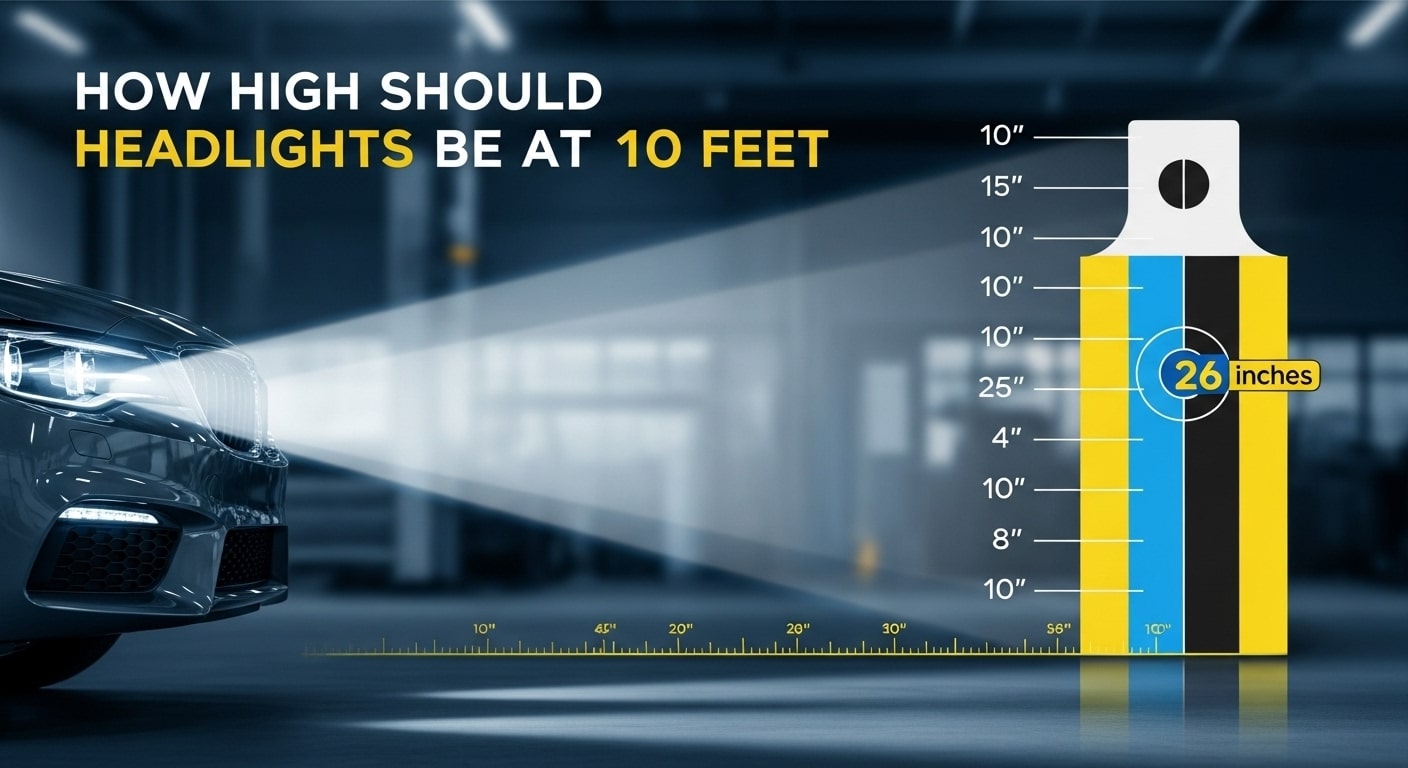
How High Should Headlights Be at 10 Feet: Optimal Setup
Have you ever been blinded by oncoming headlights that seem way too bright? You’re not alone.
Proper headlight alignment is crucial for safe driving, not just for you but for everyone on the road. But how do you know if your headlights are adjusted correctly? One simple way to check is by measuring their height at a distance of 10 feet.
This might sound technical, but it’s easier than you think. We’ll guide you through the process of ensuring your headlights are perfectly aligned. By the end, you’ll feel more confident every time you hit the road, knowing you’re not endangering yourself or others. Stick around to discover just how straightforward it is to achieve optimal headlight alignment.
Importance Of Proper Headlight Alignment
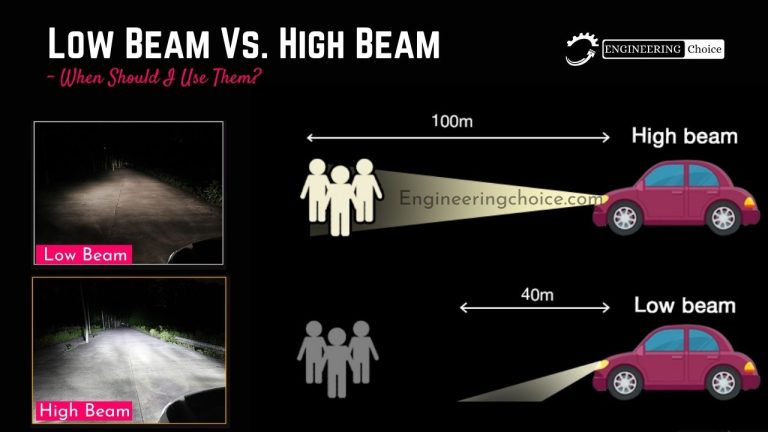
Headlight alignment is crucial for safe driving at night. Misaligned headlights can cause accidents. They might either blind oncoming drivers or limit your visibility. Proper alignment ensures you can see the road clearly. It also prevents dazzling other drivers. This enhances safety for everyone.
Regular checks on headlight alignment are vital. They ensure that your lights are at the right height. This helps in avoiding road mishaps. It also prolongs the life of your headlights. Properly aligned headlights use energy efficiently.
Why Alignment Matters For Night Driving
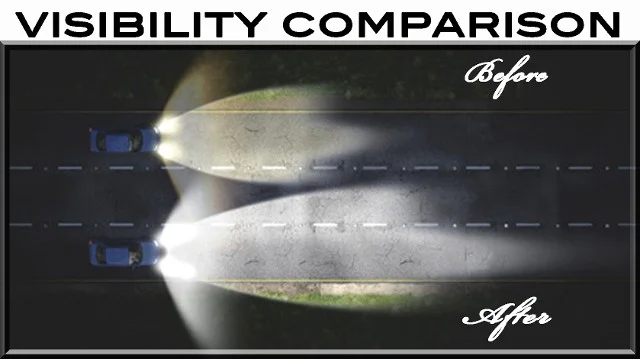
At night, visibility is limited. Your headlights become your eyes. When aligned correctly, they illuminate the road well. Misalignment can lead to poor visibility. This increases the risk of accidents. Proper alignment helps in seeing road signs. It also ensures you spot obstacles early.
Impact On Oncoming Traffic
Bright lights can blind oncoming drivers. This happens with misaligned headlights. Proper alignment ensures your lights are focused. They do not dazzle other drivers. This keeps both you and them safe on the road.
Enhancing Vehicle Safety
Headlights are more than just lights. They are a safety feature. Proper alignment boosts vehicle safety. It ensures you see clearly. It also helps in avoiding potential hazards. Well-aligned headlights keep everyone safe.
Energy Efficiency And Longevity
Misaligned headlights can waste energy. They work harder to light the road. Proper alignment ensures energy is used efficiently. This saves battery life. It also prolongs the life of your headlights. Regular checks help in maintaining them.

Credit: auxito.com
Factors Affecting Headlight Height
When adjusting your headlights, knowing how high they should be at 10 feet is crucial for safe driving at night. Several factors influence this height, ensuring you get the best visibility without blinding oncoming drivers. Let’s delve into these factors and see how they can affect your headlight settings.
Vehicle Type
Your car’s make and model play a significant role in determining the appropriate headlight height. Sedans typically have lower headlights compared to SUVs. Have you ever noticed how different your view is when driving a compact car versus a larger vehicle? That’s because the headlight alignment changes with vehicle size.
Manufacturers provide guidelines, but you might need adjustments based on personal driving habits. Check your vehicle manual for specifics, but don’t be afraid to tweak based on your experience behind the wheel.
Road Conditions
Road conditions can drastically impact headlight adjustment. Driving in an area with many hills and curves can require different settings compared to flat terrain. Think about how challenging it can be to navigate winding roads at night; proper headlight height is essential.
Consider weather conditions too. Rainy or foggy weather might demand a lower headlight setting to prevent glare. Have you ever been caught in a sudden downpour, struggling to see the road ahead? Adjusting your headlights can make a world of difference.
Load And Suspension
The load your vehicle carries affects headlight height. When your car is packed with luggage or passengers, it can tilt, altering your headlight angle. Have you ever noticed how your car sits differently when loaded for a family trip?
Suspension also matters. A vehicle with worn-out suspension may cause headlights to point higher than intended. Regular checks can prevent you from inadvertently blinding other drivers. How often do you pay attention to these details before a long drive?
Adjusting headlights may seem trivial, but it’s essential for safety. By considering factors like vehicle type, road conditions, and load, you ensure your headlights are just right. Next time you’re on the road, will you take a moment to assess your headlight height? It might just save you from a dangerous situation.
Tools Needed For Adjusting Headlights
Adjusting headlights requires basic tools like a measuring tape and screwdriver. Headlights should align with a 3. 5-inch drop at 10 feet from the wall. Proper alignment ensures safe night driving and prevents glare.
Adjusting your car’s headlights might seem daunting, but with the right tools, it becomes a manageable task. Ensuring your headlights are properly aligned not only enhances your driving visibility but also contributes to road safety. Before diving into the adjustment process, gather the necessary tools for precision and efficiency.
Measuring Tape
A measuring tape is essential for gauging the correct distance between your car and the wall or garage door you’re using as a reference. Mark a spot 10 feet away from the surface. This ensures you’re following the standard distance for checking headlight alignment. Consider using a retractable measuring tape for convenience and accuracy.
Screwdriver
A screwdriver is a must-have to adjust the screws that control the vertical and horizontal aim of your headlights. Most vehicles require a Phillips or flathead screwdriver. Check your car’s manual to know which type you’ll need. Having the right screwdriver prevents damage to the adjustment screws and ensures a smooth process.
Level Surface
A level surface is crucial for accurate headlight adjustment. Parking on an incline or uneven ground can skew your results. Ideally, find a flat driveway or garage floor. This ensures that the measurements and adjustments you make are true and effective. Think about the last time you faced glare from misaligned headlights on the road. How did it affect your driving experience? Properly aligned headlights enhance safety, not just for you, but for everyone on the road. Taking the time to adjust them using these tools can make a significant difference.
Step-by-step Guide To Measuring Headlight Height
Correct headlight height ensures safe driving at night. Adjusting headlights can prevent accidents and improve visibility. Follow this guide to measure headlight height easily.
Preparing The Vehicle
Start with a clean vehicle. Wash the headlights for clear visibility. Check tire pressure to ensure the vehicle is level. Gather necessary tools like tape measure and a notebook.
Positioning The Vehicle
Park your vehicle on a flat surface. Make sure it’s 10 feet away from a wall. Use a chalk or tape to mark the spot on the wall. This spot will help in measuring the headlight height.
Measuring The Height
Turn on your headlights. Measure from the ground to the beam’s center. The height should be equal on both sides. Note the measurements for reference. Adjust if needed using the vehicle’s manual.
Adjusting Headlights For Optimal Setup
Adjusting your car’s headlights is crucial for safe nighttime driving. Properly aligned headlights ensure you can see the road clearly without blinding oncoming drivers. If you’ve ever found yourself squinting to see the road or being flashed by annoyed drivers, your headlights might need adjusting. Let’s dive into how you can set up your headlights optimally at a distance of 10 feet from a wall.
Vertical Adjustment
Start by parking your vehicle on a level surface, ideally facing a wall. Measure the height from the ground to the center of your headlight bulb. Mark this height on the wall with tape. This mark acts as a reference point for the vertical alignment.
Turn on your headlights and adjust the vertical screws located on each headlight assembly. Your aim should be to align the beam’s hotspot or center directly with the mark on the wall. This setup prevents the beam from being too high or low, ensuring clear visibility without causing glare.
Horizontal Adjustment
Horizontal adjustment ensures your headlights point straight ahead. Look for the horizontal adjustment screws on the headlight assembly. These screws allow you to move the beam left or right.
With the car positioned 10 feet from the wall, adjust the beam so that it centers on the mark. The goal is to have both headlights pointing in the same direction, avoiding cross-eyed beams that can confuse other drivers.
Testing The Adjustment
Once you’ve made the adjustments, take your car for a spin in a dimly lit area. Observe the beam pattern on the road. Are the beams evenly distributed? Do they illuminate the road ahead without causing glare?
Consider asking a friend to drive towards your vehicle to see if the headlights are too bright or misaligned. Their feedback can be invaluable in ensuring your setup doesn’t blind other drivers. Have you ever been blinded by someone’s headlights? Imagine how much safer everyone would be if we all took a few minutes to adjust ours.
Adjusting your headlights isn’t just a safety measure; it’s an act of courtesy to fellow drivers. When was the last time you checked yours? Ensuring your headlights are correctly adjusted can significantly improve your driving experience and safety.

Credit: trail4runner.com
Common Mistakes And How To Avoid Them
Adjusting headlights to the right height ensures safe night driving. Many drivers make errors that can lead to poor visibility. Understanding these mistakes helps in achieving optimal headlight alignment. Let’s explore common missteps and ways to correct them.
Incorrect Measurements
Drivers often measure headlight height inaccurately. Using a flat and level surface is crucial. Always measure from the ground to the center of the headlight. A slight miscalculation can affect visibility significantly.
Ignoring Load Changes
Load changes impact headlight height. Extra weight in your car lowers the back, raising the front. This tilts the headlights upwards. Always check headlight alignment after adding cargo or passengers.
Overlooking Environmental Factors
Environmental factors like road slope can affect headlight adjustment. Parking on an incline or uneven surface can lead to incorrect settings. Ensure your vehicle is on a flat surface before adjusting headlights.
Benefits Of Correct Headlight Adjustment
Correct headlight adjustment enhances road safety by ensuring optimal visibility. At 10 feet, headlights should illuminate 2-4 inches below the center of the headlamp for effective lighting. Proper alignment prevents blinding other drivers and aids in clear navigation during night drives.
Adjusting your headlights correctly is more than just a maintenance task—it’s a crucial aspect of safe driving. Ensuring that your headlights are at the proper height can make a significant difference in visibility, safety, and compliance with road laws. Let’s dive into the specific benefits of adjusting your headlights at the ideal height of 10 feet.
Enhanced Visibility
Properly adjusted headlights illuminate the road effectively, letting you spot obstacles early. Imagine driving on a foggy night and suddenly realizing your headlights are too low to see the road ahead. By ensuring your headlights are at the right height, you improve your night vision and make driving in poor conditions less stressful.
Increased Safety
Incorrectly aimed headlights can be a hazard. They might blind oncoming drivers or fail to light up the road sufficiently. Keeping your headlights properly adjusted reduces the risk of accidents. Have you ever found yourself squinting at the road, struggling to see clearly? Adjusting your headlights can eliminate that strain and make your drive safer.
Compliance With Regulations
Driving with misaligned headlights can lead to fines and penalties. Most regions have specific guidelines on headlight angles to ensure safety for all road users. By keeping your headlights adjusted correctly, you avoid unnecessary fines and ensure your vehicle is road-legal. This simple maintenance task can save you from unexpected expenses and keep your driving record clean. In essence, adjusting your headlights might seem minor, but it has tangible benefits. You’ll drive with confidence, knowing that your visibility is optimal, you’re safer on the road, and you’re complying with regulations. So, when was the last time you checked your headlights? It might be time for a quick adjustment.
Credit: raybuck.com
Frequently Asked Questions
What Is The Correct Height For Headlights?
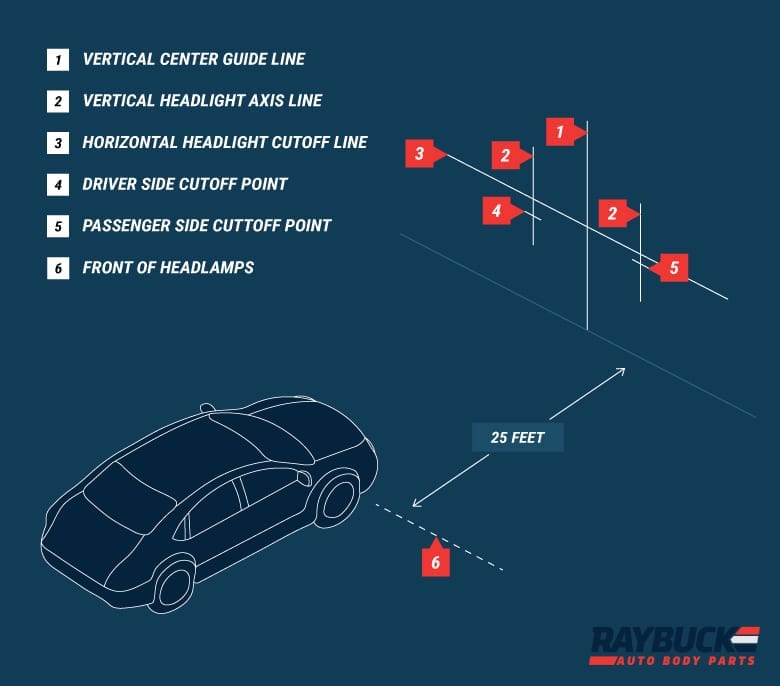
Headlights should be aimed to illuminate the road without blinding other drivers. Typically, the center of the headlight beam should be 2 to 4 inches below the headlight lens center when measured at 25 feet from a wall. Always refer to your vehicle’s manual for specific guidelines.
What Is The Rule Of Thumb For Aiming Headlights?
Aim headlights so the light hits the ground 25 feet ahead and 2 inches below the center height. Ensure alignment on level ground and adjust for optimal road visibility, avoiding glare for other drivers. Regular checks maintain safety and compliance with local regulations.
How To Correctly Level Headlights?
Park on a flat surface and measure headlight height. Mark the wall with tape at this height. Adjust the headlights until the center beam aligns with the tape marks. Ensure beams are straight and parallel. Repeat for both headlights for balanced illumination.
What Is The Minimum Height For Headlights?
Headlights must be a minimum of 22 inches above the ground. Check local regulations for specific requirements. Proper alignment ensures visibility and safety. Ensure headlights are clean and functioning correctly for optimal performance. Regular maintenance helps comply with regulations and improves night driving safety.
Conclusion
Headlight alignment is crucial for safe driving. Proper height avoids blinding others. At 10 feet, aim for a height between 2 and 3 inches lower than the bulb’s center. This ensures visibility without glare. Regular checks help maintain correct alignment.
Misaligned headlights can reduce visibility. Also, it can pose risks on the road. Always adjust headlights on level ground. Use a wall or garage door for guidance. Remember, safety comes first. Properly aligned headlights protect you and others. Keep your night drives safe and comfortable.
Adjust headlights as needed. Stay safe.

Automotive Specialist & Expert Mechanic
Noah Brooks is a skilled automotive expert with a passion for both the technical and creative aspects of the automotive world. With years of experience in repairing, restoring, and enhancing vehicles, Noah is known for his deep knowledge of car mechanics, parts, and accessories. His expertise extends to welding, troubleshooting, and offering advice on the latest car technologies and trends. Whether it’s diagnosing complex issues or guiding readers through DIY car repairs, Noah’s blog posts are filled with hands-on insights that appeal to both novice and experienced car enthusiasts. When he’s not writing, Noah is working on his own car projects, continually learning and sharing his automotive passion with the world.